

Teide
National Park
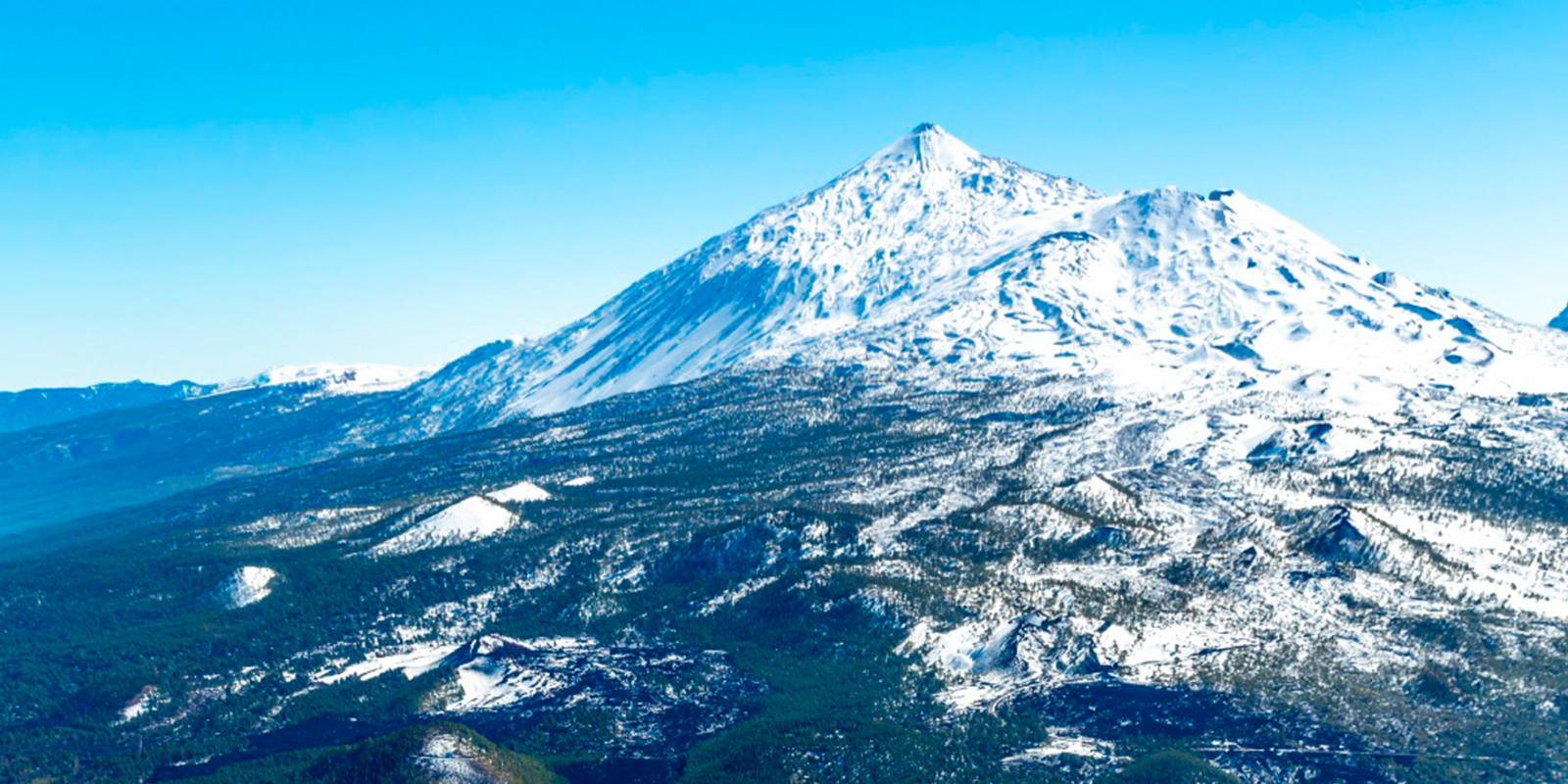
Teide National Park is the largest and oldest of the national parks in the Canary Islands, and one of the best examples of high mountain volcanic ecosystems in the world. Dominated by the Teide, Spain’s highest peak at 3,715 metres, this protected environment is home to a landscape shaped by volcanic activity and extreme altitude.
Its volcanic soils, lava flows, pumice fields, and geological formations coexist with exceptional biodiversity, comprising species of flora and fauna adapted to the extreme conditions of the environment, many of which are unique to this altitude.
In 2007, it was declared a Natural World Heritage Site by UNESCO, in recognition of its geological and biological value, as well as its spectacular landscapes. From Santiago del Teide, you can access the park by climbing up the network of trails that connect to this natural space.
Visiting it means getting closer to the volcanic origins of the island and one of the most impressive natural spaces in the world.
Ethical Tourism
Descúbrelo con responsabilidad y respeto.
- If you are going hiking, check the difficulty of the routes and the estimated time beforehand. Inform someone of your route and avoid travelling alone.
- Stay on marked trails: walking off the beaten track can damage endemic flora and cause soil erosion.
- Wear appropriate clothing and footwear: weather conditions can change quickly, especially at high altitudes.
- Do not collect rocks, plants, or any natural elements: everything you see is part of the park's ecosystem.
- Respect wildlife: avoid making loud noises and do not feed the animals.
- Avoid stopping in unauthorised or dangerous places along the road.
- If you are going to photograph the landscape, do so without encroaching on the track or compromising your safety or that of others.
- Keep the environment clean. Do not leave any rubbish, packaging or cigarette butts behind.
How to get there?
From the town centre of Santiago del Teide, the park can be accessed via the TF-38 road, a route that allows you to appreciate the transition of ecosystems as you gain altitude while entering the Teide National Park.
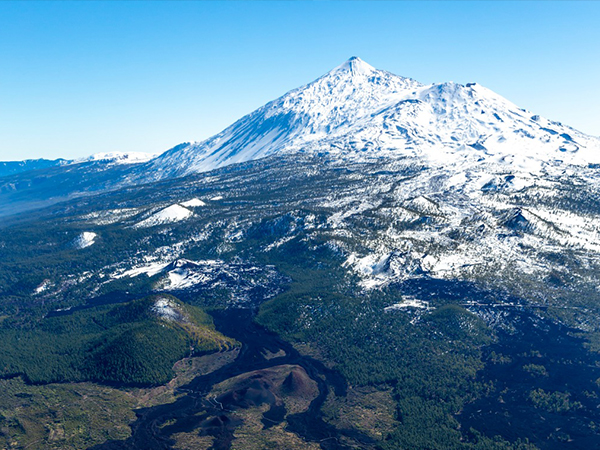
TEIDE NATIONAL PARK
From Santiago del Teide, you can access the Teide National Park. Its high mountain landscapes feature lava flows, volcanic landscapes, and biodiversity that has adapted to one of the most unique areas in Europe.