At 2:30 p.m. on 18 November 1909, a fissure opened in the Cumbres de Abeque. Over the following ten days, lava flows advanced across the land and volcanic ash reached different parts of Tenerife. In Santiago del Teide, the event transformed the surrounding area and disrupted the daily lives of a population that lived with uncertainty as they watched it unfold.
The eruption of the Chinyero volcano soon attracted interest beyond the municipality. The press documented its activity day by day, photographs were taken and the phenomenon became the subject of scientific study. It consequently became one of the best-documented eruptions of its time in Spain.
One hundred and seventeen years later, the cone and lava flows still bear the visible traces of those days. The anniversary offers an opportunity to revisit an event that not only changed the landscape but also holds a distinct place in the history and collective memory of Santiago del Teide.
Ten days that transformed the landscape
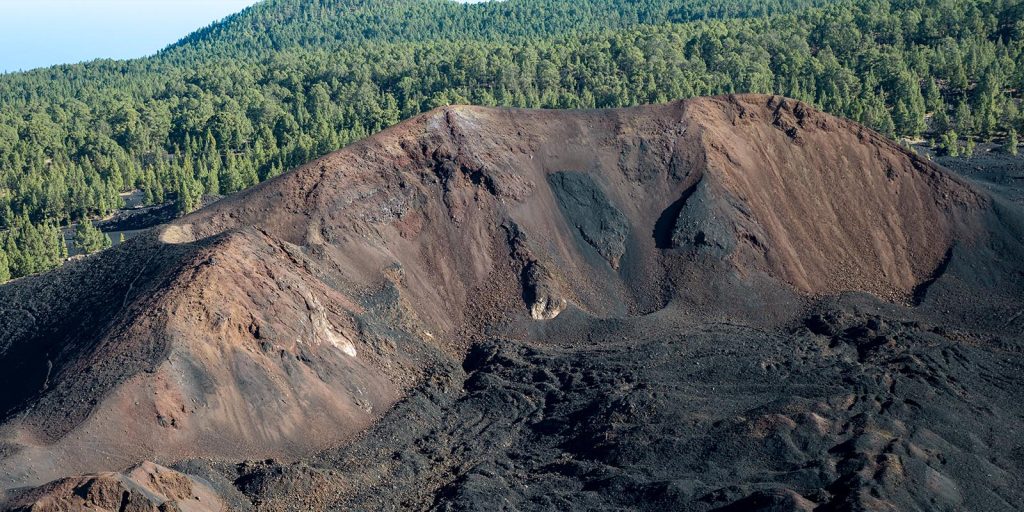
Ten days were enough to change the surroundings of Chinyero. After the fissure opened, several vents gradually became active and the cone we recognise today began to take shape. At the same time, lava flows spread across the land and the wind carried the volcanic ash towards northern Tenerife.
For the people of Santiago del Teide, this transformation was not a distant phenomenon. The explosions and advancing lava brought uncertainty into everyday life and affected activities in the surrounding area. Although there were no fatalities, those days became an enduring part of the municipality’s history.
When the activity ceased on 27 November, the landscape was no longer the same. In just a few days, a new cone had risen from the land and the lava flows had shaped a volcanic landscape. This marked the end of what remains the most recent eruption recorded in Tenerife.
An eruption documented day by day
In 1909, news could not be transmitted with the immediacy we know today. To report on the volcano’s activity, carrier pigeons transported messages to telegraph stations, while newspapers published accounts that allowed people elsewhere to follow what was happening in Santiago del Teide.
Photography introduced a dimension that had not previously formed part of the documentation of an eruption in Spain. As well as preserving a visual record of those days, the images helped the phenomenon reach a much wider audience.
The event also attracted the attention of the scientific community. During and after the eruption, observations, testimonies and samples were collected to study its characteristics and produce one of the earliest scientific accounts of a volcanic event in Spain.
Together, the published reports, images and scientific studies allow its development to be reconstructed today from different perspectives. This documentation helps us understand how the phenomenon was observed, investigated and communicated at the beginning of the 20th century.
Part of this history is presented at the Chinyero Visitor Centre, located in the town centre of Santiago del Teide. Its exhibition explores the 1909 eruption from both geological and social perspectives and explains how it transformed the landscape and the lives of the local population. A visit to the centre provides an opportunity to learn more about this volcanic event.
The Chinyero Special Nature Reserve, a natural laboratory
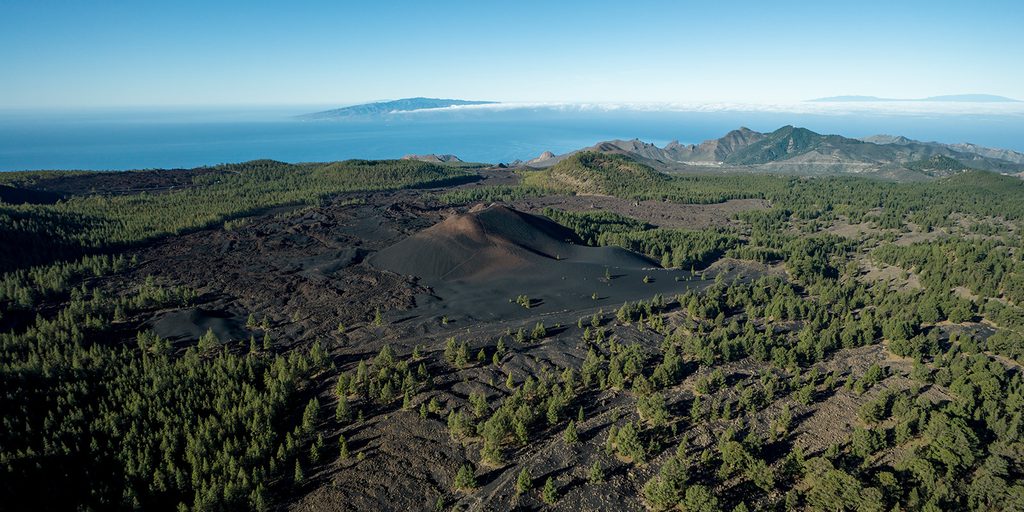
The cone and lava field formed in 1909 make up one of the most distinctive areas within the Chinyero Special Nature Reserve. This protected area preserves recent volcanic formations, habitats of particular interest and a landscape that reveals different chapters in Tenerife’s geological activity.
The reserve also provides a natural laboratory in which to observe how life gradually gains a foothold on volcanic materials. Lichens and mosses are among the first organisms to colonise these surfaces. Over time, other plant species begin to appear, revealing a slow process of ecological succession that helps us understand how these areas evolve.
This geological and biological value also explains the fragility of the environment. To help conserve it, visitors must remain on marked trails, avoid climbing the cone and leave the stones, vegetation and all other elements of the protected area undisturbed.
A story preserved in the memory of Santiago del Teide
The 1909 eruption does not belong solely to Tenerife’s geological history. In Santiago del Teide, its memory remains connected to a transformation experienced at close hand by the local population, whose traces can still be recognised across the landscape.
Commemorating its anniversary helps connect the landscape we see today with what happened during those ten days. Photographs, newspaper accounts, testimonies and scientific documents have all helped preserve this memory and provide a more detailed understanding of how the event developed.
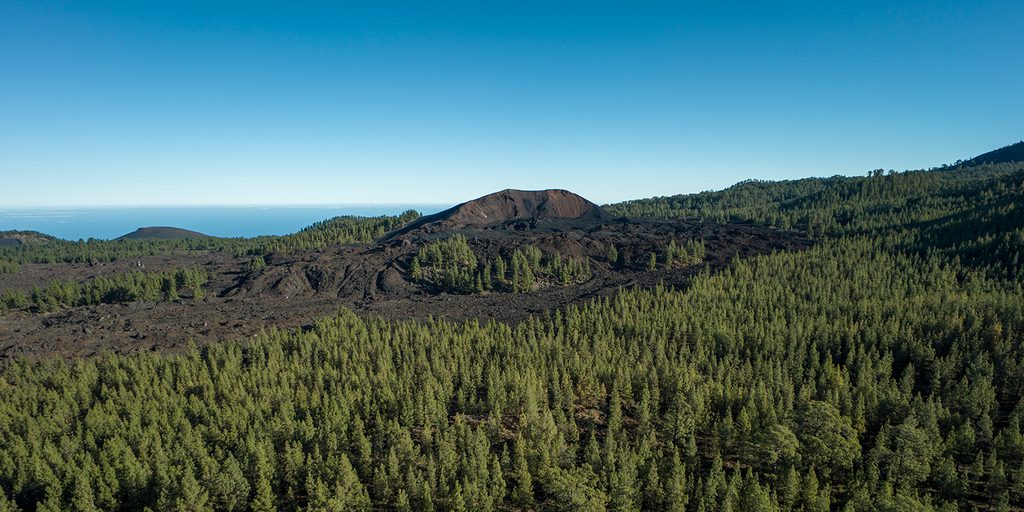
The study of historical eruptions continues to provide valuable information for understanding and monitoring volcanic activity. For those discovering Santiago del Teide today, learning about what happened in November 1909 offers a different perspective on this environment: not simply as a landscape of cones, lava and vegetation, but as a place where nature, history and memory remain closely intertwined.